Language & Culture
How to Say Hello in 21 Indian Languages
Hello in Hindi is नमस्ते (namaste). See hello in Tamil (vanakkam), Telugu, Malayalam and 17 more Indian languages, with native script and pronunciation.
By Indilingo Team on November 3, 2026
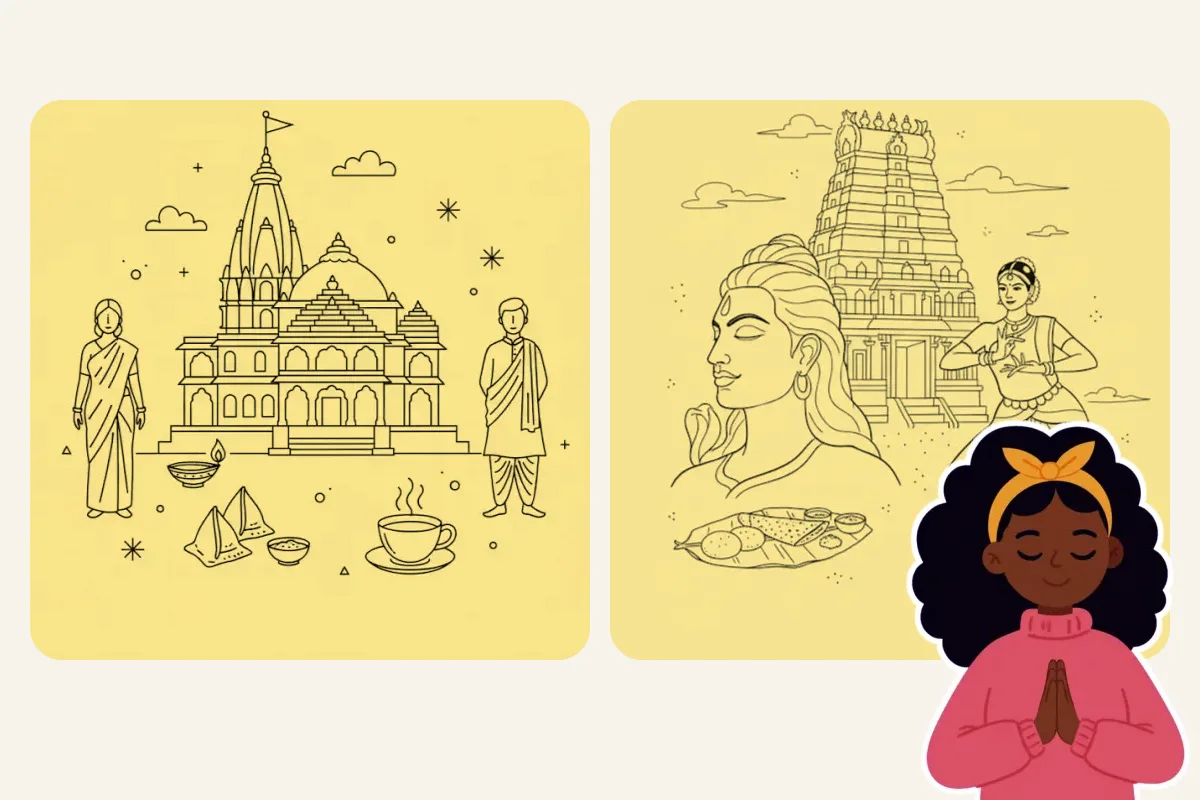
Hello in Hindi is नमस्ते (namaste). Hindi is the most widely spoken language in India, and namaste is recognised in most of the country. There is no single Indian greeting, though. The constitution lists 22 scheduled languages, and many of them have a hello of their own. Tamil speakers say வணக்கம் (vanakkam), Sikhs greet each other with ਸਤਿ ਸ੍ਰੀ ਅਕਾਲ (sat sri akal), and Urdu speakers say آداب (aadaab) or السلام علیکم (assalamu alaikum).
The table gives hello in 21 of the 22 scheduled languages, with the native script and a simple pronunciation. Several of these words, namaste and namaskar among them, also mean goodbye.
Hello in Indian languages: quick table
| Language | Hello | Say it | When to use it |
|---|---|---|---|
| Assamese | নমস্কাৰ | nomoskar | Formal and polite |
| Bengali | নমস্কার / আসসালামু আলাইকুম | nomoshkar / assalamu alaikum | Nomoshkar among Hindus, assalamu alaikum among Muslims |
| Bodo | खुलुमबाय | khulumbai | Respectful, "greetings to you" |
| Dogri | नमस्ते | namaste | Everyday polite hello |
| Gujarati | નમસ્તે / નમસ્કાર | namaste / namaskar | Polite hello for anyone |
| Hindi | नमस्ते / नमस्कार | namaste / namaskar | Works with anyone, at any time of day |
| Kannada | ನಮಸ್ಕಾರ | namaskara | Polite hello; ನಮಸ್ತೆ (namaste) is also used |
| Kashmiri | السلام علیکم / نَمَسکار | assalamu alaikum / namaskar | Assalamu alaikum among Muslims, namaskar among Hindus |
| Konkani | नमस्कार | namaskar | Polite hello |
| Maithili | प्रणाम / नमस्कार | pranaam / namaskar | Pranaam is the respectful form |
| Malayalam | നമസ്കാരം | namaskaram | Very formal; friends usually say "hi" |
| Manipuri | ꯈꯨꯔꯨꯝꯖꯔꯤ | khurumjari | Respectful greeting |
| Marathi | नमस्कार | namaskar | Hello and goodbye |
| Nepali | नमस्ते / नमस्कार | namaste / namaskar | Namaskar is the more respectful |
| Odia | ନମସ୍କାର | namaskar | Hello and goodbye |
| Punjabi | ਸਤਿ ਸ੍ਰੀ ਅਕਾਲ | sat sri akal | Sikh greeting; add "ji" for respect |
| Sanskrit | नमो नमः / नमस्ते | namo namah / namaste | Namo namah is formal |
| Santali | ᱡᱚᱦᱟᱨ | johar | Hello and greetings |
| Tamil | வணக்கம் | vanakkam | Formal or casual, with anyone |
| Telugu | నమస్కారం | namaskaram | Formal hello |
| Urdu | آداب / السلام علیکم | aadaab / assalamu alaikum | Aadaab is polite and not tied to religion; assalamu alaikum is the Islamic greeting |
We checked each greeting against the Indian government's Bhasha Sangam booklet, which teaches a short greeting dialogue in all 22 scheduled languages, and against at least one other dictionary or phrasebook. Sindhi is missing on purpose. The references we checked give different greetings depending on religion and region, so we'll add Sindhi once a native speaker has confirmed the most natural hello.
How do you say hello in each Indian language?
Hindi: नमस्ते (namaste)
Namaste works with almost anyone and is usually said with the palms pressed together. It comes from Sanskrit, where namah means "bow" and te means "to you". नमस्कार (namaskar) is used the same way, and both double as goodbye. प्रणाम (pranaam) is more respectful, and राम राम (ram ram) is a colloquial Hindu greeting. For the next phrases to learn, see our Hindi phrases page and 50 common Hindi phrases.
Tamil: வணக்கம் (vanakkam)
Vanakkam comes from the verb வணங்கு (vanangu), "to bow" or "to worship". You can say it to a stranger, a shopkeeper or an old friend, so it's the only Tamil hello you need. It's used in Tamil Nadu and in the Tamil communities of Sri Lanka, Singapore and Malaysia. See the Tamil phrases page, or read why learn Tamil.
Telugu: నమస్కారం (namaskaram)
Namaskaram is the formal hello in Andhra Pradesh and Telangana. With someone you already know, it's more natural to open with బాగున్నారా? (bagunnara?), "are you well?". The Telugu phrases page has more greetings.
Malayalam: നമസ്കാരം (namaskaram)
Namaskaram is correct, but in daily life it sounds stiff. Malayalis usually greet friends and colleagues with an English "hi" and then ask സുഖമാണോ? (sukhamaano?), "are you well?". Learn more on the Malayalam phrases page.
Gujarati: નમસ્તે (namaste)
Namaste and નમસ્કાર (namaskar) are the polite Gujarati greetings. Between friends and family, people often skip them and open with કેમ છો? (kem chho?), "how are you?", which works as a hello by itself. Practise it on the Gujarati phrases page.
Bengali: নমস্কার (nomoshkar)
The Bengali greeting depends on religion. Hindus say nomoshkar. Muslims say আসসালামু আলাইকুম (assalamu alaikum) or the shorter সালাম (salaam). Most people in Bangladesh are Muslim, so assalamu alaikum is the hello you'll hear most there. More on the Bengali phrases page.
Marathi: नमस्कार (namaskar)
Marathi speakers say namaskar for hello and for goodbye. नमस्ते (namaste) is understood, but it's less common in Marathi than in Hindi. See the Marathi phrases page.
Kannada: ನಮಸ್ಕಾರ (namaskara)
Namaskara is the polite Kannada hello, and ನಮಸ್ತೆ (namaste) is also used. Kannada pronounces the final a that Hindi drops, so it's namaskara rather than namaskar.
Punjabi: ਸਤਿ ਸ੍ਰੀ ਅਕਾਲ (sat sri akal)
Sat sri akal is the greeting Sikhs use with each other. It's usually translated as "God is truth". Sat means "truth", and akal, "timeless", refers to God. Add ਜੀ (ji) for respect: sat sri akal ji. Punjabi speakers normally choose the greeting by the religion of the person they're greeting, so a Punjabi Hindu gets namaste and a Punjabi Muslim gets assalamu alaikum. Many Amritdhari (initiated) Sikhs prefer a longer greeting, waheguru ji ka khalsa, waheguru ji ki fateh. More on the Punjabi phrases page.
Urdu: آداب (aadaab)
Aadaab is polite, a little formal, and not tied to religion. The Islamic greeting السلام علیکم (assalamu alaikum), "peace be upon you", is answered with وعلیکم السلام (wa alaikum assalam). Urdu is spoken in India and is the national language of Pakistan, where assalamu alaikum is the everyday greeting. In Pakistan, aadaab is associated with Indian Urdu and can sound overly formal. Start on the Urdu course page.
Odia: ନମସ୍କାର (namaskar)
Odia speakers in Odisha use namaskar for hello and for goodbye. The Odia alphabet page teaches the script, which is easy to spot by the rounded tops of its letters.
Assamese: নমস্কাৰ (nomoskar)
Nomoskar is the formal Assamese hello. Assamese and Bengali share most of their script, but the last letter here is ৰ, which Bengali doesn't use. Bengali writes the same r sound as র. See the Assamese alphabet.
Nepali: नमस्ते (namaste)
Nepali shares namaste and नमस्कार (namaskar) with Hindi, and namaskar is the more respectful of the two. Nepali is the official language of Nepal and is also spoken in Sikkim, Darjeeling and other parts of India.
Maithili: प्रणाम (pranaam)
Maithili is spoken in the Mithila region of Bihar and in Nepal's Terai. प्रणाम (pranaam) is the respectful greeting, and नमस्कार (namaskar) is also used.
Konkani: नमस्कार (namaskar)
Konkani, the main language of Goa, uses namaskar as its polite hello. Konkani is written in several scripts, including Kannada and Roman. Devanagari is the official one in Goa, and it's the one used here.
Dogri: नमस्ते (namaste)
Dogri, spoken mainly in the Jammu region, uses namaste just as Hindi does. It is written in Devanagari.
Kashmiri: السلام علیکم (assalamu alaikum)
Kashmiri greetings also follow religion. Kashmiri Muslims say assalamu alaikum, and Kashmiri Hindus say namaskar, written نَمَسکار in the Perso-Arabic script that Kashmiri uses. See the Kashmiri alphabet.
Sanskrit: नमो नमः (namo namah)
Few people speak Sanskrit day to day, but it has greetings, and it's where namaste comes from. नमो नमः (namo namah) is formal, and नमस्ते (namaste) and नमस्कारः (namaskarah) are also correct. See the Sanskrit course page.
Bodo: खुलुमबाय (khulumbai)
Bodo is spoken mainly in Assam and is officially written in Devanagari. Khulumbai means roughly "greetings to you". It's said when you meet someone for the first time, or for the first time that day.
Manipuri: ꯈꯨꯔꯨꯝꯖꯔꯤ (khurumjari)
Khurumjari is the respectful Manipuri (Meitei) greeting. Manipuri has its own script, Meitei Mayek, and is also written in the Bengali script, which was the usual way to write it from the 18th century on. Learn the letters on the Manipuri alphabet page.
Santali: ᱡᱚᱦᱟᱨ (johar)
Johar is the Santali hello. Santali is spoken in Jharkhand, West Bengal, Odisha and Bihar, and is written in Ol Chiki, a script Raghunath Murmu created for the language in 1925. See the Ol Chiki letters.
How do Indians say hello on the phone?
Most people answer the phone with the English word "hello". It's common enough to have its own spelling in Indian scripts, such as हेलो in Hindi, হ্যালো in Bengali and ہیلو in Urdu. Once you know who's calling, switching to namaste or vanakkam is friendly, especially with older relatives.
Do Indian languages have a word for good morning?
They do, but many of these words sound formal, and plenty of people just say "good morning" in English. These are the ones we could confirm:
- Hindi: सुप्रभात (suprabhat) means good morning, but in conversation namaste covers any time of day.
- Urdu: صبح بخیر (subah bakhair) for good morning and شب بخیر (shab bakhair) for good night.
- Tamil: காலை வணக்கம் (kaalai vanakkam), literally "morning vanakkam".
- Telugu: శుభోదయం (shubhodayam), a formal good morning.
- Bengali: সুপ্রভাত (suprobhat), which is formal, or শুভ সকাল (shubho shokal).
- Malayalam: സുപ്രഭാതം (suprabhaatham) exists, but it sounds stiff, and most Malayalis say "good morning" in English.
Which greeting should you use with someone from India?
- If you know the person's language, use its greeting: vanakkam with Tamil speakers, sat sri akal with Sikhs, kem chho with Gujaratis, nomoshkar with Bengali Hindus.
- With Muslims from India, Pakistan or Bangladesh, assalamu alaikum is the usual greeting, and the reply is wa alaikum assalam.
- If you aren't sure, namaste is understood by most people from North India and Nepal, and a plain English hello is never rude.
- Pressing your palms together for namaste or vanakkam is a nice touch, but nobody will mind if you don't.
After hello, the phrases people usually want next are thank you in Indian languages and how to introduce yourself in Indian languages.
Reading a greeting is easy. Saying it to a person is harder. In Indilingo you can practise greetings and short conversations out loud with an AI tutor in the Speak tab, and the free plan includes free minutes. The app covers all 22 scheduled Indian languages, teaches every script letter by letter with audio, Meitei Mayek and Ol Chiki included, and explains things in your own language, so you could learn Tamil through Spanish or Hindi through Arabic. It's on Android and iOS.
FAQ
What is hello in Indian?
There is no language called Indian. The most widely understood hello in India is the Hindi नमस्ते (namaste). Other languages have their own, such as வணக்கம் (vanakkam) in Tamil and ਸਤਿ ਸ੍ਰੀ ਅਕਾਲ (sat sri akal) among Sikhs.
How do you say hello in Hindi?
Say नमस्ते (namaste), pronounced "nuh-muh-stay". नमस्कार (namaskar) means the same. On the phone, Hindi speakers say हेलो (hello).
Is namaste hello or goodbye?
Both. Namaste is used when you meet someone and when you leave. Literally it means "I bow to you", from Sanskrit namah (bow) and te (to you).
How do you say hello in Tamil?
Say வணக்கம் (vanakkam). It works with strangers and friends, at any time of day.
How do you say hello in Telugu?
Say నమస్కారం (namaskaram) in formal situations. With people you know, బాగున్నారా? (bagunnara?), "are you well?", is a common opener.
How do you say hello in Malayalam?
The formal word is നമസ്കാരം (namaskaram). In everyday Kerala speech, people usually say "hi" or "hello" and then ask സുഖമാണോ? (sukhamaano?), "are you well?".
Keep learning
Take the next lesson with you
Build towards fluent conversations with practical lessons on Android and iPhone.
Get the app